Acai berries are a rich source of polyphenolic compounds, especially the flavonoids known as anthocyanins, which give the berry its characteristic deep purple color. Acai is high in oleic acid and contains palmitic and linoleic fatty acids. Linoleic acid (omega-6) is an Essential Fatty Acid which the body cannot produce and must obtain through diet. Acai is high in dietary fiber and contains a wide range of vitamins and minerals

Our AçaiVida® is produced so that some of the oil content normally present in Açai powders is reduced, ensuring it does not have the clumping issues often associated with açai juice powders. The delicious berry flavor, exceptional water dispersibility and creamy texture of AçaiVida® enables its use in a much wider variety of products than ever before.
Acai berries are a rich source of polyphenolic compounds, especially the flavonoids known as anthocyanins, which give the berry its characteristic deep purple color. Acai is high in oleic acid and contains palmitic and linoleic fatty acids. Linoleic acid (omega-6) is an Essential Fatty Acid which the body cannot produce and must obtain through diet. Acai is high in dietary fiber and contains a wide range of vitamins and minerals.

Acerola is a rich source of vitamin and also contains bioflavonoids like kaempferol, quercetin and rutin, which are required for the absorption of vitamin C in the body. It is a very good source of anthocyanins and the carotenoids lutein and beta-carotene.*

Acerola is a rich source of vitamin and also contains bioflavonoids like kaempferol, quercetin and rutin, which are required for the absorption of vitamin C in the body. It is a very good source of anthocyanins and the carotenoids lutein and beta-carotene.*

The main bioactive compound in apple cider vinegar is acetic acid (ethanoic acid), a short-chain fatty acid. It also contains polyphenols, flavonoids, chlorogenic acid, citric acid, malic acid, lactic acid and tartaric acid.

The main bioactive compound in apple cider vinegar is acetic acid (ethanoic acid), a short-chain fatty acid. It also contains polyphenols, flavonoids, chlorogenic acid, citric acid, malic acid, lactic acid and tartaric acid.

Rich in antioxidants, apples contain quercetin, chlorogenic acid, procyanidin and catechin, and they are a good source of the soluble dietary fiber, pectin.

Aronia berries are rich in polyphenolic compounds such as anthocyanins, phenolic acids and flavanols.

Ripe yellow bananas are a good source of potassium, manganese and phosphorus. Bananas and plantains are high in fibers such as pectin and fructooligosaccharides (FOS).

Nutrient-dense baobab fruits are rich in prebiotic dietary fiber (including pectin), potassium and antioxidant phytonutrients (phenolics and bioflavonoids), high in vitamin C, calcium and magnesium, and contain a wide variety of vitamins and minerals. The bioflavonoids present in the fruits assist with the absorption of vitamin C in the body.

Berry Essential™ Antioxidant Blend(organic) is a unique combination of antioxidant-ripe berries; acai, acerola, amla, aronia, camu camu, cranberry, goji, grape, maqui, pomegranate, sea buckthorn.
The berries in this blend contain potent antioxidants like anthocyanins, resveratrol, quercetin, xanthones, carotenoids, flavonoids, ellagitannins, catechins, coumarins, polysaccharides, vitamin C and fatty acids, as well as containing fiber and an array of vitamins and minerals.

BettaBerries® Antioxidant Blend is a concentrated, proprietary blend of many of the most phytonutrient-rich and well-known berries. It contains Acai, Acerola, Amla, Cranberry, Goji, Jabuticaba, Mangosteen, Maqui, Pomegranate, and Strawberries. Bursting with potent antioxidant plant compounds, these berries contain polyphenols, anthocyanins, bioflavonoids, carotenoids, vitamin C, and an array of vitamins and minerals.

Blueberries contain a wealth of phytonutrients including anthocyanins, which give the blueberry its striking indigo color, proanthocyanidins, resveratrol, flavonols, pterostilbene, kaempferol, tannins, zeaxanthin and lutein. They also have high levels of manganese, vitamins B6, C, E and K, and dietary fiber, both soluble and insoluble.

Camu Camu contains the highest documented quantity of natural vitamin C on earth, usually about 5 to 6% naturally-occurring vitamin C. Virtually all vitamin C supplements are chemically synthesized molecules such as ascorbic acid, potassium ascorbate, magnesium ascorbate and calcium ascorbate, and are often made from genetically modified corn sugar. Compared to oranges, camu camu contains 30 times more vitamin C, 3 times more niacin, 10 times more iron, double the amount of riboflavin and 50% more phosphorus. Camu camu also contains beta-carotene, potassium, calcium and amino acids.

Coconut milk is high in fat, containing myristic acid, palmitic acid, caprylic acid, capric acid, stearic acid, oleic acid and noleic acid. It is a rich source of potassium and contains a variety of vitamins and minerals.

Coconut milk is high in fat, containing myristic acid, palmitic acid, caprylic acid, capric acid, stearic acid, oleic acid and noleic acid. It is a rich source of potassium and contains a variety of vitamins and minerals.

Coconut water is rich in natural electrolytes, especially magnesium and potassium, and is a rich source of cytokinins (plant hormones that support cell growth).

Coconut water is rich in natural electrolytes, especially magnesium and potassium, and is a rich source of cytokinins (plant hormones that support cell growth).

Dragon fruits are a treasure-house of healthful nutrients including vitamin C, calcium, phosphorus, essential fatty acids, oligosaccharides and various betalains and phenols. The many tiny black seeds contained in the flesh contain omega-6 and omega-3 essential fatty acids

Elderberries are known to be a rich source of flavonoids, especially anthocyanins, which give the fruit its characteristic dark purple color. Other flavonoids include quercetin, kaempferol and beta-carotene and the berries also contain phenolic acids, tannins and essential oils. Elderberries are rich in potassium and a good source of calcium, iron, phosphorus and vitamin C

These beautiful berries are a rich source of polysaccharides and one of the richest food sources of carotenoids (a better source than even carrots), including beta-carotene and zeaxanthin. They also contain beta-sitosterol and nineteen amino acids, including all nine essential amino acids. In addition, they are rich in potassium, contain complex B-vitamins, have higher levels of vitamin C than oranges and contain 21 trace minerals, including germanium, a trace mineral rarely found in foods.

These beautiful berries are a rich source of polysaccharides and one of the richest food sources of carotenoids (a better source than even carrots), including beta-carotene and zeaxanthin. They also contain beta-sitosterol and nineteen amino acids, including all nine essential amino acids. In addition, they are rich in potassium, contain complex B-vitamins, have higher levels of vitamin C than oranges and contain 21 trace minerals, including germanium, a trace mineral rarely found in foods.

Like other blue and purple fruits, concord grapes contain abundant polyphenols such as flavonoids like resveratrol and other compounds like hydroxycinnamic acids, catechins and methyl anthranilate, the aromatic compound responsible for the concord grape’s unique aroma and flavor. They also contain moderate amounts of vitamin C and potassium.

JabuVital® is a delicious juice powder produced from the fruit that grows on the trunk of the Jabuticaba tree, also known as “Brazilian Grape Tree”. Jabuticaba is one of Brazil’s favorite fruits and the name Jabuticaba, derived from the Tupi word Jabuti (tortoise) + Caba (place), means the place where you find tortoises.
Jabuticaba’s deep purple skin covers a translucent white to rosy pink flesh that has a delicate, sweet flavor, a sub-acid tang and an exotic fragrance. As the fruit begins to ferment 3-4 days after it’s picked, fresh fruit is rarely available outside of growing areas and the fruit is processed and dried soon after harvesting.

Famous for their sour taste as a result of their high citric acid content, lemons are also an excellent source of naturally occurring vitamin C, or ascorbic acid, and contain the plant compound, citrus limonin. Like other citrus fruits, lemons contain a variety of phytochemicals like the flavonoid glycosides hesperetin, naringin, and naringenin, as well as containing smaller amounts of flavonoids like ß-carotenes, ß-cryptoxanthin, zeaxanthin, and lutein. They are a good source of dietary fiber and contain a number of vitamins and minerals, including B-vitamins (niacin, folate, thiamin, riboflavin, folate, pantothenic acid, pyridoxine) as well as zinc, magnesium, copper, iron, calcium and potassium.*

Lo han guo’s extremely sweet taste is attributed to its high content of mogrosides, especially mogroside V. Mogrosides are a group of terpene glycosides known to be 250 times sweeter than sucrose, and are numbered I to V according to their level of sweetness, with mogroside V being the sweetest. Lo han guo is also rich in polyphenols like siraitiflavandiol, and contains vitamins A and C, iron, potassium, calcium and 18 amino acids.

Lucuma fruit is an excellent source of carbohydrates, in particular starches, and fiber, especially insoluble fiber. It is a rich source of phytochemicals, especially the flavanol phenolics such as catechin and epicatechin and the carotenoids beta-carotene and xanthophylls. Lucuma is a good source of potassium, zinc, calcium, magnesium, vitamins B1 and B3 and contains a variety of other vitamins and minerals

Noni fruit is a rich source of carbohydrates, especially polysaccharides, as well as containing abundant phytonutrients like iridoids, flavonoids, scopoletin, anthraquinones, lignans and phytosterols like beta-sitosterol. It is also rich in iron, a good source of dietary fiber, and contains moderate amounts of potassium, calcium, manganese, selenium, phosphorus, magnesium, vitamin C and amino acids.

An excellent source of vitamin C (ascorbic acid) and a good source of citric acid and citrates, oranges are a very good source of dietary fiber, as well as a good source of potassium, calcium, folate and vitamin B1 (thiamin). They contain a wide variety of phytonutrient compounds including citrus flavanones like hesperedin and naringenin, carotenoids like beta-cryptoxanthin, as well as anthocyanins, hydroxycinnamic acids and a variety of other polyphenols. Despite being comprised of mostly carbohydrates and water, with very little protein or fat, oranges have a low glycemic index, due to their high fiber and polyphenol content.

Papaya fruit is known mostly for the enzyme papain, which assists the digestion of proteins, as well as other enzymes that help the body digest and utilize important nutrients. Papaya is rich in beta-carotene (provitamin A) and flavonoids, as well as folate, potassium, iron, calcium, B vitamins, and vitamins C and E. It is also a good source of dietary fiber

Rich in vitamin C, passion fruit is a very good source of dietary fiber, including low-methoxyl pectin, and contains high amounts of piceatannol, a phenolic compound, and the carotenoids beta-carotene and cryptoxanthin. The fruit also contains a moderate source of iron, potassium, copper, phosphorus, magnesium, and some B-vitamins like niacin, riboflavin, folate and vitamin B6.

Peaches contain many antioxidant phytonutrients, including chlorogenic acid, catechins and epicatechins, gallic acid, ellagic acid, rutin, isoquercetin, carotenoids and cyanidin derivatives, as well as vitamins and minerals.

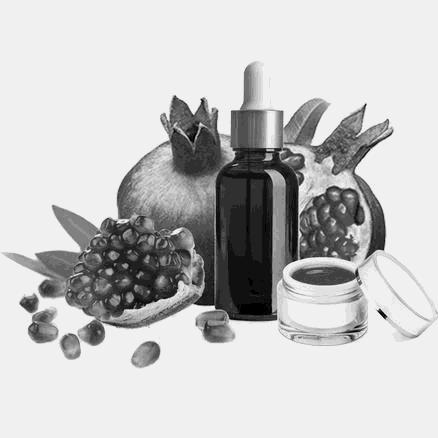
Pomegranate’s ruby red color is a result of its rich content of anthocyanins. It also contains abundant ellagitannin compounds such as granatin B and punicalagin, as well as punicic acid. The fruit is a very good source of soluble and insoluble dietary fiber, and a good source of calcium, copper, potassium, manganese, vitamin C and K, and B-complex vitamins such as pantothenic acid, folates, pyridoxine, niacin, thiamin and riboflavin.

Pomegranate’s ruby red color is a result of its rich content of anthocyanins. It also contains abundant ellagitannin compounds such as granatin B and punicalagin, as well as punicic acid. The fruit is a very good source of soluble and insoluble dietary fiber, and a good source of calcium, copper, potassium, manganese, vitamin C and K, and B-complex vitamins such as pantothenic acid, folates, pyridoxine, niacin, thiamin and riboflavin.

Rosehips contain carotenoids (beta-carotene, lycopene, lutein and zeaxanthin), flavonoids, polyphenols, leucoanthocyanins and catechins.

More than 25 different anthocyanins have been found in strawberries, including pelargonidin, which is the most abundant, and is also responsible for the fruit’s bright red color. Its other beneficial plant compounds include ellagic acid, ellagitannins and procyanidins. Strawberries are a very good source of dietary fiber, vitamin C and manganese, and they also contain folate, potassium, magnesium, vitamin K, vitamin B6, pantothenic acid.

More than 25 different anthocyanins have been found in strawberries, including pelargonidin, which is the most abundant, and is also responsible for the fruit’s bright red color. Its other beneficial plant compounds include ellagic acid, ellagitannins and procyanidins. Strawberries are a very good source of dietary fiber, vitamin C and manganese, and they also contain folate, potassium, magnesium, vitamin K, vitamin B6, pantothenic acid.